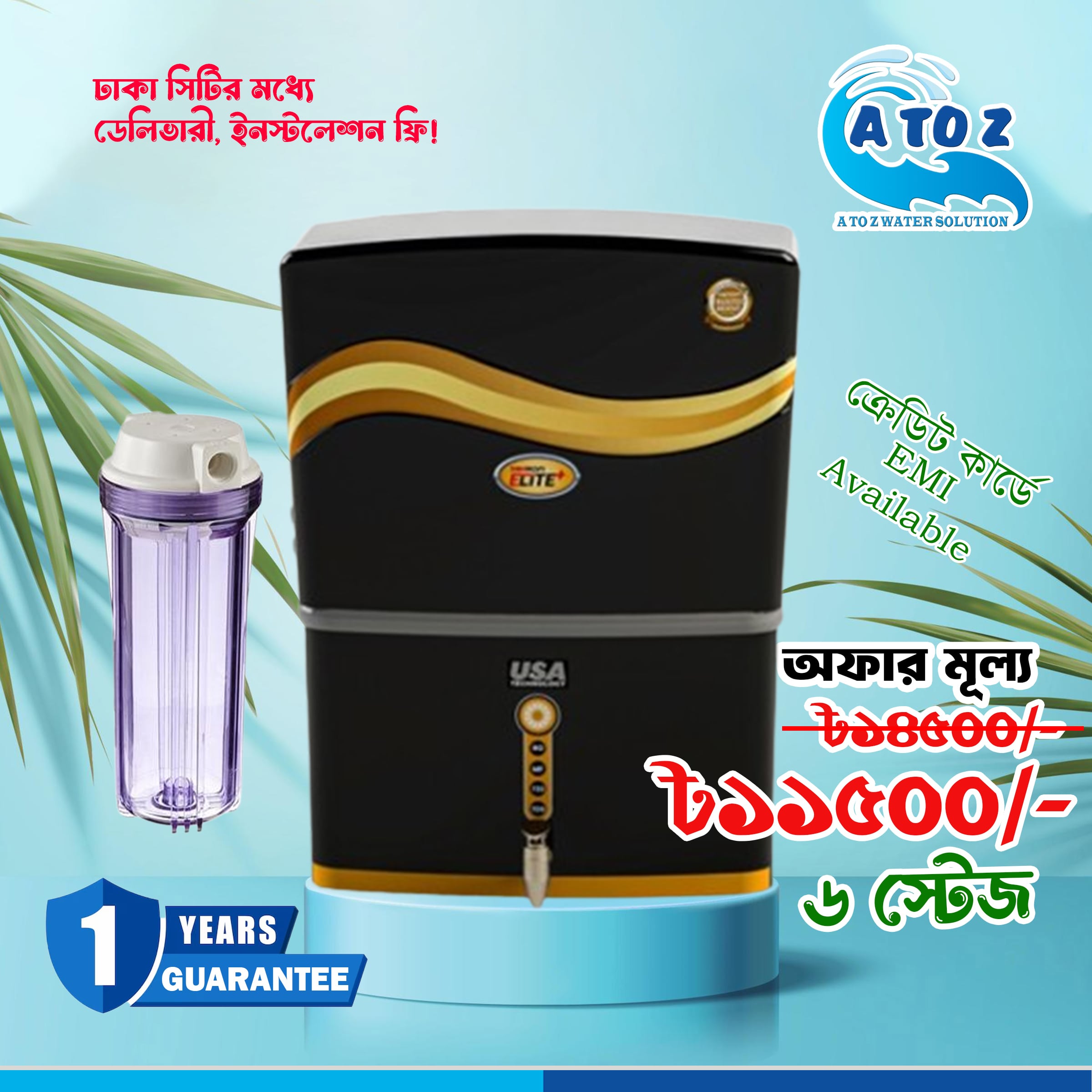
Enjoy fast and reliable delivery to every corner of Bangladesh!

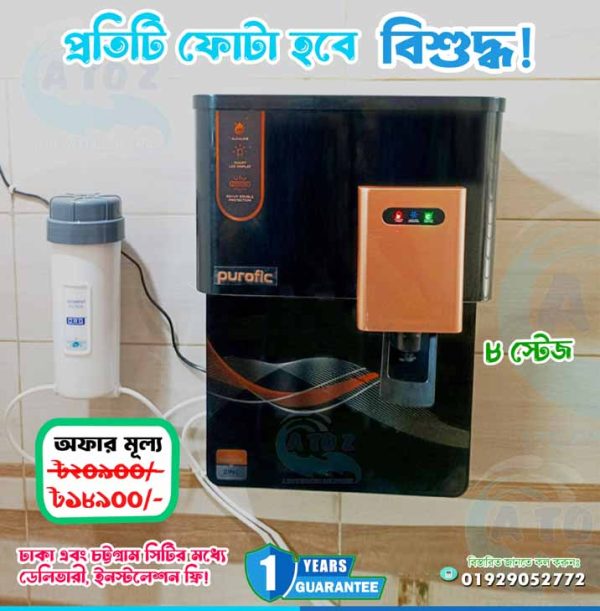
| Brand | Top Pure/PenTec/Ecosoft/Hipure |
| Model | 7NONR.O |
| Capacity | 1GPM |
| Filtration Stage | 7 |
| Water Type | Normal |
| Dimension | 41x16x39 CM |
| Reserve Capacity | NO |
| Country of Technology | USA |
| Origin | China |
| Technology | Non Reverse Osmosis (Direct) |
| Filtration Stage: 01 | Poly Propylene (PP) |
| Filtration Stage: 02 | Box Carbon (UDF) |
| Filtration Stage: 03 | Net Carbon (CTO) |
| Filtration Stage: 04 | Sediment |
| Filtration Stage: 05 | Taste odor |
| Filtration Stage: 06 | Mineral |
| Filtration Stage: 07 | Alkaline |
Mineral Filtration: By definition, mineral water is sourced from springs known for their various minerals, such as salts and sulfur compounds. Mineral water may be still (no bubbles) or sparkling (aka carbonated or effervescent). By definition and FDA regulations, mineral water must contain no less than 250 parts per million of "total dissolved solids" that come from a protected underground water source. Mineral water comes from deep within the earth.
Sounds refreshing, right? Turns out it's so much more. Mineral water can contain levels of sodium, magnesium, zinc, and calcium, plus other good-for-you minerals, all of which must occur naturally. In this regard, you really can taste the land you're drinking from. It also makes sense why some mineral waters get prized above others, so much so they are shipped around the world for consumption.